Bedding guide · Material and design
Choosing a Down Comforter: Fill, Construction, and Climate
A down comforter can feel cloud-light yet remarkably warm, but the experience depends on more than a lofty label. Fill weight, fill power, shell fabric, stitching, room temperature, and your own sleeping habits all shape how a comforter performs. Here is how to read those details—and choose a layer that feels right for your climate and your nights.
The appeal of down, explained
Down is the soft, three-dimensional cluster found beneath the feathers of geese and ducks. Unlike a flat feather, a down cluster has fine filaments that radiate from a central point and create pockets capable of holding still air. That trapped air is the source of down’s celebrated insulating quality: the clusters help slow the movement of warmth away from the body, while the comforter itself can remain relatively light.
This distinction matters when comparing bedding. Warmth is not simply a question of how heavy a comforter feels. A dense, heavy layer may feel substantial without offering the same warmth-to-weight balance as a well-designed down comforter. Conversely, a lofty comforter is not automatically suitable for every sleeper. Its performance depends on the amount and quality of fill, how that fill is held in place, and whether the surrounding room allows the sleeper to stay comfortable through the night.
Think of choosing a down comforter as a small exercise in textile literacy. The most useful specifications describe different things; they should not be treated as interchangeable measures of quality. Fill power speaks to loft potential, fill weight tells you how much insulation is inside, and construction determines whether that insulation stays evenly distributed. Climate and personal preference complete the picture.
Fill power and fill weight are not the same
Two terms appear frequently in a bedding guide: fill power and fill weight. Both can help describe a down comforter, but they answer different questions.
Fill power is a measure of the space a given weight of down occupies under a standardized test. It is commonly reported as a number, such as 600 or 800. Higher fill power generally indicates that the down clusters can loft more for the same weight, which can support a lighter, airier construction with strong insulating potential. It does not, by itself, tell you how warm the finished comforter will be.
Fill weight is the actual weight of the down inside the comforter, usually listed for a particular size. A comforter with higher fill power may contain less down than a lower-fill-power comforter and still achieve a similar level of loft. But if the higher-loft comforter contains very little fill, it may not provide the coverage or warmth you expect. The combination is what matters.
When specifications are available, compare fill power and fill weight together, and check whether the figures refer to the same size. A king comforter naturally needs more total fill than a twin, so numbers cannot be compared fairly without knowing the dimensions. If the listing gives only a broad label such as “lightweight” or “all-season,” treat it as a starting point rather than a precise temperature rating.
- Fill power: an indication of the down’s loft potential relative to its weight.
- Fill weight: the amount of down used in the comforter.
- Warmth: the result of fill, construction, shell, dimensions, and use—not a single number.
Why loft can feel warm without feeling heavy
Loft is the height and airiness of the comforter when its filling has space to expand. A lofty down cluster creates more tiny air pockets, and those pockets help insulate. That is why a well-made down comforter can feel light in the hand while still creating a cocoon of warmth. The sensation is different from being covered by a dense blanket: instead of weight doing the work, the comforter’s structure helps hold a layer of warm air around the sleeper.
Loft alone, however, is not a guarantee of comfort. A comforter that is very lofty may be too warm for someone who sleeps hot, lives in a mild climate, or keeps the bedroom heated. The fill can also compress under pressure or lose some of its loft if stored damp, washed incorrectly, or packed tightly for long periods. Good care and appropriate construction help preserve its airy character.
Personal comfort is subjective. Some people like a softly enveloping layer; others prefer a barely-there cover that does not retain as much heat. Consider whether you tend to wake warm or cool, whether you share a bed with someone whose temperature preferences differ, and whether the bedroom changes noticeably between night and morning. Those everyday observations are often more useful than choosing the highest number on a product specification.
Construction: keeping the fill where it belongs
Down needs room to loft, but it also needs containment. The comforter’s internal construction affects how evenly the fill is spread and whether the bed has warm, consistent coverage or patches that feel thin. Look for clear descriptions of the stitching pattern rather than relying on a photograph or a general claim about warmth.
Baffle-box construction
In a baffle-box design, narrow fabric walls connect the top and bottom shell layers, creating three-dimensional compartments. These internal walls give down room to expand through the depth of the comforter and help limit migration between sections. Baffle boxes are often used in designs intended to provide more loft, though the finished warmth still depends on fill quantity and the size and arrangement of the compartments.
Sewn-through construction
In a sewn-through comforter, the top and bottom layers are stitched directly together to form pockets or channels. This construction can keep fill distributed and produce a relatively low-profile finish. Because the shell layers meet at the seams, those lines may feel cooler than the filled sections. In a lighter comforter, that can be a useful way to reduce insulation; in a cold bedroom, seam placement and fill coverage deserve closer attention.
Channels, boxes, and practical details
Some comforters use long channels, squares, or other compartment shapes. There is no universally best pattern: the design should hold fill evenly while allowing the comforter to drape in a way you like. Check for secure stitching, reinforced edges, and corner loops if you plan to use a duvet cover. The loops can help attach the cover and reduce shifting during the night.
Construction details matter over time as well as on the first night. Even distribution helps prevent a comforter from developing empty areas, and a durable shell can help contain fine down. A thoughtfully finished edge also makes the comforter easier to handle when changing covers or airing it out.
The shell: the first thing you feel
The shell fabric is the outer layer that encloses the fill. It affects hand feel, drape, breathability, sound, and how well the comforter contains down. Cotton is a familiar choice, with different weaves and finishes offering different sensations. A smooth cotton shell may feel crisp and cool, while a softer finish can feel more relaxed against the skin. Thread count is one specification, but it should not be read in isolation: fiber quality, weave, finishing, and construction also shape the fabric.
A tightly woven shell can help prevent small down clusters from working their way through the fabric. This quality is sometimes described as downproofness. A comforter should not shed noticeably during ordinary use, though a small amount of loose fiber may appear as a new item settles. If the shell feels noisy, stiff, or unusually slick, consider whether that texture will suit your bedding preferences, especially if the comforter will be used without a duvet cover.
Breathability is another consideration, but it is not a simple property of the shell alone. The weave, fiber, finish, fill volume, and room environment all contribute to how warm the complete bedding system feels. For sleepers who tend to overheat, a breathable-feeling shell and a lighter fill can be worth prioritizing; pairing them with a duvet cover made from a comfortable, breathable fabric may also affect the overall feel.
Match warmth to your room and your habits
Climate is not only the weather outside. Indoor heating, insulation, humidity, window exposure, and how much air circulates through a room can make the bedroom feel very different from the local forecast. Start with the temperature you actually experience at bedtime and toward morning. A comforter that feels perfect in a cool, unheated room may be too insulating in a well-heated apartment.
Labels such as lightweight, medium-weight, and winter-weight are useful shorthand, but manufacturers may use them differently. Where possible, read the detailed specifications and check whether warmth guidance applies to the comforter’s size, fill, and construction. If you are between warmth levels, consider your bedding habits: do you sleep in light clothing, use a top sheet, or prefer to layer a blanket that can be removed?
Warm rooms or warm sleepers
Consider a lighter design with less total fill, particularly if the bedroom stays warm year-round. A breathable shell and removable layers can make adjustments easier.
Variable seasons
A moderate warmth level can work across a wider range when paired with a sheet or an additional blanket. Keep the removable layer nearby for colder nights.
Cool rooms or cold sleepers
A warmer design may be more comfortable, provided it has enough fill and suitable construction. Check dimensions and edge coverage as well as loft.
For couples, compromise need not mean choosing the heaviest option. Separate blankets or a lighter comforter with an additional layer on one side can accommodate different preferences. If one sleeper runs warm and the other cold, flexible layering may be more comfortable than asking a single comforter to serve two very different needs.
Down is not the only route to warmth
Down is valued for its distinctive combination of loft and low weight, but it is not the right material for every household or sleeper. Some people prefer a different tactile feel, want an alternative fill, or have practical care preferences that point them toward other options. Wool, cotton, and synthetic fills each behave differently, and comfort depends on the complete product rather than the name of the material alone.
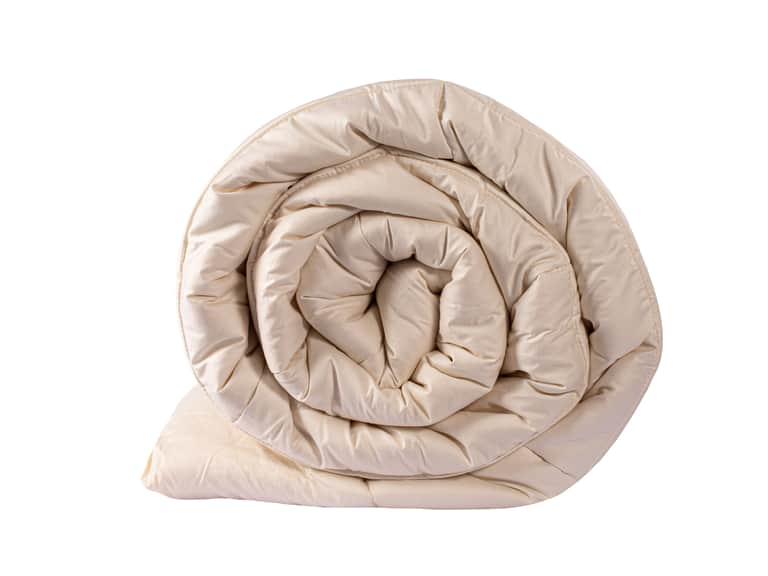
For example, the Sleep and Beyond myMerino Wool Comforter Light is a wool-filled alternative, not a down comforter. Its product details describe certified organic merino wool inside an organic cotton sateen shell, with a lighter construction intended for warmer seasons. It can be useful as a point of comparison for readers considering how fill type and weight influence the feel of bedding. Wool’s performance and care requirements differ from down’s, so compare the listed materials and instructions rather than assuming one will behave exactly like the other.
When comparing alternatives, ask the same practical questions: What is the fill? How is it distributed? What does the care label require? Is the comforter designed for a particular season or temperature range? Those details provide a more meaningful comparison than broad descriptions such as “luxurious,” “natural,” or “all-season.”
Care that protects loft
Down clusters need air and room to expand. Routine care is usually less about frequent washing and more about keeping the comforter protected, dry, and uncompressed. A duvet cover creates a washable outer layer and helps reduce direct contact with body oils, dust, and everyday spills. Follow the comforter’s own care label: cleaning methods vary by construction and manufacturer, and a general rule should never override the product instructions.
When a comforter can be washed at home, use the specified cycle and cleaning products, and make sure it dries thoroughly. Damp fill can clump and may develop an unpleasant odor. Low, gentle drying may be recommended for some items, but temperature and method should be checked against the label. If professional cleaning is advised, tell the cleaner that the item is down-filled and follow any stated restrictions.
- Air the comforter periodically in a dry, well-ventilated space.
- Use a duvet cover and launder that cover according to its own care instructions.
- Store the comforter clean and completely dry; avoid long-term compression in a tight bag.
- Fluff it gently to redistribute fill, rather than pulling aggressively at seams or compartments.
- Address stains promptly using only a method allowed by the care label.
Good care can help a comforter retain its loft, but no bedding lasts indefinitely. Pay attention to persistent flat areas, broken stitching, escaping fill, or changes in warmth. These signs may indicate that the comforter needs repair, professional attention, or replacement.
A measured approach to labels and sourcing
Product claims can be polished, so let verifiable details guide the decision. Look for a clear breakdown of fill type, fill power where provided, fill weight or warmth category, shell material, construction, available sizes, and cleaning requirements. A precise description makes it easier to compare options; vague language does not tell you how a comforter will perform in your room.
Readers may also want information about animal-welfare standards, sourcing, and traceability. These questions are distinct from warmth and construction, but they are part of an informed purchase. Check whether a brand explains its standards and whether any named certification applies to the specific product and material. Do not assume that a broad phrase such as “responsibly sourced” communicates every detail of the supply chain.
For allergy concerns, avoid treating any one fill as universally hypoallergenic. Sensitivity can relate to several factors, including dust, detergent, the shell, and individual responses to materials. Review the product’s claims carefully and seek qualified medical advice if allergies or asthma are a concern.
A simple checklist before choosing
Before settling on a down comforter, pause over a few questions. What is the usual bedroom temperature? Do you wake warm or cold? Is the comforter for one season, or will you use it throughout the year? Do you prefer a low, neat profile or a visibly lofty bed? Will it live inside a duvet cover, and are you comfortable with its care requirements?
Then compare the specifications in context. Look at fill power and fill weight together, note the construction, and examine the shell description. Check the dimensions against your mattress and the amount of overhang you prefer. If a product provides a warmth rating, use it as guidance, not a promise that every sleeper will experience the same temperature.
Finally, make room for the small practicalities that make bedding feel personal: the rustle of a shell, the way a comforter falls over the bed, whether it stays in place inside a cover, and how easy it is to maintain. The best choice is not necessarily the most expensive, the most lofty, or the one with the highest specification. It is the one whose warmth, weight, and care routine suit the life you actually lead.
The quiet luxury of getting the details right
A down comforter’s appeal lies in a particular balance: insulation without unnecessary bulk, softness without fuss, and a sense of warmth that can feel almost weightless. Understanding fill and construction makes that appeal easier to evaluate. Fill power describes loft potential; fill weight indicates how much down is present; stitching organizes the fill; and the shell shapes the surface you touch every night.
Put those details beside your room temperature, seasonal needs, and sleeping preferences, and the decision becomes far less mysterious. A considered bedding choice does not need a grand promise. It needs the right degree of warmth, a construction that keeps fill in place, a shell that feels comfortable, and care instructions you can follow. When those elements align, the result is not simply a beautiful bed, but a more thoughtfully made place to rest.